In The New Yorker (June 6), Louis Menand offers a brilliant survey of the ideas that underpin the American idea of College, in the guise of a book review. Indispensable
Louis Menand has a wonderful piece, looking back on the late-night talk show through the ages.
Vidal feigned perplexity at Mailer’s distress, joined forces with Flanner (who clearly found him très gentil), and made Mailer look ridiculous the way a cat makes a dog look ridiculous.
Mailer’s fatal insult, though, was to Cavett. “Why don’t you look at your question sheet and ask a question?” Mailer said to him at one point, after the swords had been drawn all around. “Why don’t you fold it five ways and put it where the moon don’t shine?”
James Pope, writing for Interjunction, offers recommendations for digital interactive fiction based on a survey of 36 readers.
I observed, questionnaired and spoke with 36 readers about their experiences of ‘reading’ a selection of interactive — hypertext — fictions, and armed with my data I would argue that reading interactive fiction can be enjoyable in many ways.
It’s an interesting conceit. But Pope never describes who the 36 readers were, or how they were chosen, or under what conditions and constraints they were reading. Were these 36 fans of Stephen King, or 36 art historians, or 36 Labour MPs? Did they all like Truffaut and Goddard? What else had they read? What did they like? Without knowing, we can’t really know what their opinions mean.
Surveying 36 readers gives the enterprise a veneer of objectivity, a sort of anthropological flair, isolating the study from quirks of individual taste and interest. But this balance is a mirage. Joe likes Jules and Jim, Jill likes Star Wars, and Pat likes Battleship Potemkin. They all are right! What, exactly, do we learn by averaging the three of them in a statistical pool. It might be interesting to let each argue their separate case; that’s why we read lots of critics.
The desire to avoid judgment pervades the two-part essay:
But I also found clear evidence that the experience of non-linear narratives combined with user-unfriendly interfaces can break the significant balance of effort and reward, a relationship which has been identified by such researchers as Nell (1988) and Csikszentmihalyi (1975, 2002) as being essential to reading pleasure.
I’m as big a believer in citation as anyone — my little Hypertext 2009 paper “On Hypertext Narrative’ has 45 references, Aarseth to Zellweger, plus 21 additional footnotes — but do we need authorities to tell us that “the significant balance of effort and reward” is “essential to reading please?” Perhaps we do, if we want to justify “significant” and “essential”, as Carroll (1865) argues so cogently:
”Twas brillig, and the slithy toves
Did gyre and gimble in the wabe;
All mimsy were the borogoves,
And the mome raths outgrabe.
Did gyre and gimble in the wabe;
All mimsy were the borogoves,
And the mome raths outgrabe.
Of course, some people hate Carroll and Lear. My father, on the other hand, brought Alice in his footlocker to the South Pacific, along with Notes From Underground and Archie and Mehitabel, making room by discarding some government property he considered less necessary to the war effort. That’s the second problem here: if you try to triangulate “reading pleasure” by surveying traverses from a bunch of literary landmarks, you’re bound to find yourself in the proverbial swamp. And if you do it 36 times and sum the results, your boots are going to be soggy. Menand makes the point nicely in his recent New Yorker piece, “Show or Tell: should creative writing be taught?"
What is usually said is that you can’t teach inspiration, but you can teach craft. What counted as craft for James, though, was very different from what counted as craft for Hemingway. What counts as craft for Ann Beattie (who teaches at the University of Virginia) must be different from what counts as craft for Jonathan Safran Foer (who teaches at N.Y.U.). There is no “craft of fiction” as such.
In the end, best-seller lists are a poor way to choose what to read, and a grab-bag of 36 random readers is not much better. We don’t want to know what 9 out of 10 doctors recommend; we want to know what this friend thinks, and what that friend believes. And part of the reason we listen to friends and favorite critics is that we know who they are, what they like, how they want to spend their time. It was nice to know that Siskel and Ebert both liked a movie, but it was interesting when Gene loved a movie and Roger hated it, and that’s where we really went to town.
Recommended: Arthur Krystal on Hazlitt, who might not in fact have been “the first modern man” but can arguably be the first modern critic.
In “Return To Paradise” (New Yorker, June 2), Jonathan Rosen starts from the 1638 meeting between Milton and Galileo.
The great astronomer was old and blind and under house arrest, confined by order of the Inquisition, which had forced him to recant his belief that the earth revolves around the sun, as formulated in his Dialogue Concerning the Two Chief World Systems. Milton was thirty years old—his own blindness, his own arrest, and his own cosmological epic, Paradise Lost, all lay before him.
This is nice. I admire the triple “and” in the first sentence. It's solid, sensible. And it's a bonus if you remember how Paradise Lost ends:
The world was all before them, where to choose
Their place of rest, and Providence their guide.
They, hand in hand, with wand’ring steps and slow,
Through Eden took their solitary way.
Their place of rest, and Providence their guide.
They, hand in hand, with wand’ring steps and slow,
Through Eden took their solitary way.
Here is the distilled essence of the Ross/Shawn New Yorker. If you know the allusion, there is it — it's fun, it draws you in, it illuminates the passage. But if you don’t see it — if you're an earnest college freshman or a harried banker and Milton is pretty much Greek to you — you aren’t stopped in your tracks, or shamed, or chided. (For more, see Menand’s American Studies.)
Blog categories fall apart because they’re incidental. A post doesn’t exist in order to be categorized.
In the heat of the moment, we forget to put some posts in the right category. We forget to put some posts in any category at all. We can't decide which categories to choose — and so everything ends up turning miscellaneous.
Or, we say, "I'll sort these out later.” We all know how that turns out!
The answer, I think, is simple:
- let the blog do a lot of the categorizing for you
- make it easy to remind yourself what you want to revisit
- avoid premature commitment
Scott Johnson is doing something similar for photography at Ookles. Nobody is as thorough about labeling and tagging their snapshots as they ought to be. But Ookles can deploy some good state-of-the-art face recognition: it can tell that this is a picture of Suzy and that's a picture of Terrence. So, it goes ahead and tags things for you. (And, I'm sure, there will be some handy way to tell it that, 'No, that's not Suzy, it's her long lost twin sister Suw! Who knew?!')
Tinderbox 3.6 introduces sets, which make it really easy to let agents assign things to categories for you. Agents search for notes that meet some criteria, such as "notes that are inside my archives, published in the last three years, and that mention Roger Ebert, David Mamet, or Louis Menand". Now, we can let agents automatically add and remove tags:
Topic=$Topic+"Critics"+"Literature"-"Dull"
Adornments and containers can add and remove tags, too. Put something there, and it automatically gets metadata. Your pile of finished tasks can automatically add Complete and remove ToDo from the note's tags.
All this extends Tinderbox's role as a spreadsheet of ideas, and makes it much easier to keep categories alive and reasonable consistent. There will always be edge cases: this post mentions Mamet but it's not really about the theater, just as Suw isn’t really Suzy but merely looks like her. But getting things roughly right is much better than giving up.
I expect this is especially important for high-volume pro bloggers. Good, focussed categories are good ad targets, so they should be good revenue enhancers. But you don't have a stable of tame indexers categorizing every bit of gossip of about The Valley or the next Apple gizmo! If an occasional post is indexed somewhat fancifully, the readers and advertisers will soon forgive you. But everyone has archives, and we all should use our archives to greater effect.
In Salon, Andrew O'Hehir absolutely adores the new Ishiguro, Never Let Me Go.
Like all the best speculative fiction -- and this is one of the best new novels of any species I've read in a long time -- "Never Let Me Go" has a mystery to unfold, or several of them.
In The New Yorker, Louis Menand is slightly more skeptical.
by Kazuo Ishiguro
Oh, but this is a sad, sad book.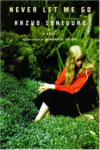
It's not the sadness of elegy, really, not longing for bright glories and grand times we once had, not even though they weren't really as bright and grand as we once thought.
It's not the sadness of tragedy, either, the terrible knowledge that these fine young people are doomed, that the very things that make them so particularly, specifically wonderful are, in the end, going to destroy them.
Perhaps it's the sadness of a world that pays too much attention to Harry Potter, a response to the nostalgia that makes us dream of Hogwarts and Tom Brown's Schooldays and those merry old playing fields of Eaton.
This is, I think, the sadness of depression, of a bitter, hopeless resentment of everything and everyone. Ishiguro's latest is, oddly, science fiction set in the present. The plot mustn't be discussed because figuring out what the book is about is the book's narrative engine and, without that simple pleasure, I think the book might be unbearable.
This morning, the Boston Globe has an even-handed review of a book that explains that the reason American scientists seem to be losing the debate with creationism is that they occasionally talk about Darwin in politics and philosophy. If they would only stick to science and let the religious people have exclusive license to talk about faith, the religious people might stop complaining that teaching kids about science corrupts children's faith and might work to ensure that American science students will be even more poorly educated.
One sees why Ishiguro could get depressed.
Still, if Never Let Me Go were student work, or the work of an unknown writer, one might praise the spare clean prose and lament that the book was so inhumanly bleak, that its author has contrived to build a universe that is cruel beyond belief or plausibility, and that he has labeled that universe Britain in the Nineties not because this is true, but because it is convenient.
Update: Menand's review. " The central premise in this book is basically the same as that in the book that made Ishiguro famous, The Remains of the Day (1989): even when happiness is standing right in front of you, it’s very hard to grasp. Probably you already suspected that."
Metacritic has a nice rundown. Useful!
Imagine what would happen if George Washington came back and ran against George W. Bush. Did he really deserve all those honors? I bet he wasn't even there at Horseheads! And look at how he led his men into terrible danger — on Christmas Eve! — without proper rations or equipment! This man recklessly endangered his comrades: he is Unfit To Command!
Louis Menand has a predictably fine review of the depressing evidence that almost no voters have a coherent idea of what they are voting for, or why.
Louis Menand takes on Eats, Shoots, and Leaves: hold on to your hats!
....About half the semicolons in the rest of the book are either unnecessary or ungrammatical, and the comma is deployed as the mood strikes. Sometimes, phrases such as “of course” are set off by commas; sometimes, they are not. Doubtful, distracting, and unwarranted commas turn up in front of restrictive phrases (“Naturally we become timid about making our insights known, in such inhospitable conditions”), before correlative conjunctions (“Either this will ring bells for you, or it won’t”), and in prepositional phrases (“including biblical names, and any foreign name with an unpronounced final ‘s’”). Where you most expect punctuation, it may not show up at all: “You have to give initial capitals to the words Biro and Hoover otherwise you automatically get tedious letters from solicitors.”
Menand takes advantage of the occasion to explore just what it is about the details of writing that make some writing such fun -- that makes us want to read, for example, James Agee's reviews of inconsequential 1940's movies.
There are writers loved for their humor who are not funny people, and writers admired for their eloquence who swallow their words, never look you in the eye, and can’t seem to finish a sentence. Wisdom on the page correlates with wisdom in the writer about as frequently as a high batting average correlates with a high I.Q.: they just seem to have very little to do with one another. Witty and charming people can produce prose of sneering sententiousness, and fretful neurotics can, to their readers, seem as though they must be delightful to live with.
When you come right down to it, the whole thing is worthwhile just for Menand's image of the slow, careful writer, composing "at the pace of a snail after a night on the town."
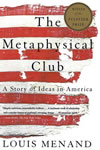
I have a Tinderbox agent that collects all my notes my Menand's writing, from this latest review to his brilliant analysis of the psychological depths of The Cat In The Hat.
by Louis Menand
A delightful, fascinating, and brilliant book, the volume transforms our concept of what intellectual history can accomplish. Menand reconstructs and reconsiders the intellectual currents that dominated the best American thought, from the Civil War to the Progressive Era, and shows the real complexity and subtlety of the ideas that took hold, as well as those that failed. Menand is also a superbly readable biographer, adeptly showing how an individual's human circumstances affected, or failed to affect, their thought. Fascinating, thrilling, and readable, this is a very important book.
A problem with conventional weblog category schemes is that they're a pain to set up. When you add a category, it's empty. So it's one more thing to worry about, and remember, every day -- and an empty category is merely a liability.
A nice thing about Tinderbox agents is that they let you add a category page to an existing weblog, populate it with relevant posts, and automatically update it every day. For example, over the past year I've discovered the work of Louis Menand, who Diane Greco brought to my attention. In Tinderbox, I can quickly make an agent that collects everything that mentions Menand (except not anything still filed among my private drafts).
In 45 seconds, I've built and populated a new category. Here it is. And I made a discovery: months and months before Greco told me about Menand, I'd blogged his marvelous New Yorker analysis of The Cat In The Hat. I didn't know that!
"But that was then, a long time gone. Now we have something different: we have "anything goes" without the spirit. "Transgression
Agents aren't completely free. Since agents constantly scan your writing, a large array of agents operating over an extensive body of text -- such as a weblog that goes back to 2001 -- can slow things down. And, if agents make it easy to create lots of categories, that could lead to new kinds of confusion. There's no free lunch. But it's a new set of affordances and a new set of tradeoffs, and that's the name of our game.
by Louis Menand
This fascinating assortment of essays on recent ideas in American thought ranges freely from Oliver Wendell Holmes' conception of negligence to Pauline Kael's contribution to postmodern thought. Menand writes superbly, with an enviably graceful and decorous informality.
In the middle of Louis Menand's 1995 appreciation of film critic Pauline Kael, we find a passage with implications for literary hypertext that are, I think, interesting and important.
Kael's contention that "serious" movies should meet the same standard as pulp--that the should be entertaining -- turned out to be an extremely useful and widely adopted critical principle. For it rests on an empirically sustainable proposition, which is that although people sometimes have a hard time deciding whether or not something is art, they are rarely fooled into thinking they are having a good time when they are not. It was Kael's therapeutic advice to the overcultivated that if they just concentrated on responding to the stimulus, the aesthetic would take care of themselves. What good is form if the content leaves you cold
The academic term for the kind of antiformalism Kael promoted is 'postmodernism.' Postmodernism in the arts simply is anti-essentialism. It is a reaction against the idea, associated by academic critics in the postwar years with modernist literature, painting, and architecture, that the various arts have their own essential qualities--that poetry is essentially a matter of the organization of language, that painting is essentially a matter of composition, that architecture is essentially a matter of space and light.
First, obviously, that's a really interesting definition of postmodernism.
And, second, I was in a meeting with a bunch of really fine hypertext writers the other day. In passing, one of them remarked, "Of course, what we do isn't really entertainment." Why not? Could we?
A Diane Greco special: Louis Menand, writing in The New Yorker, on the stylistics of end matter. Menand's prose is nicely spiced, and Diane writes, "Louis Menand, I adore you."
Whatever you do, incidentally, do not look for guidance in the pages of The New Yorker , where house style requires quotation marks for book titles and the insertion of commas in places where other periodicals don’t even have places.
And Menand makes an important point about the experience of using complex software.
When, in the old days, you hit the wrong key on your typewriter, you got one wrong character. Strike the wrong keys in Word and you are suddenly writing in Norwegian Bokmal ( Bokmal ?).
This isn't conventional Word-bashing; it's the nature of powerful tools. The more we can do, the more likely that one ill-advised button will change the character set to Hittite, or break all your permalinks. People say, "there are too many features in Word", but of course everyone uses different parts of the program; the Norwegians won't thank you for making it harder to use Bokmal.
Of course, Menand enjoys Word-bashing too -- it's too much fun to pass up entirely.
Few features of Word can be responsible for more user meltdowns than Footnote and Endnote (which is saying a lot in the case of a program whose Thesaurus treats “information” as “in formation,” offering “in order” and “in sequence” as possible synonyms, and whose spellcheck suggests that when you typed the unrecognized “decorums” you might have meant “deco rums”). To begin with, the designers of Word apparently believe that the conventional method of endnote numbering is with lowercase Roman numerals -- i, ii, iii, etc. When was the last time you read anything that adhered to this style? It would lead to sentences like:
In the Gramscian paradigm, the "intellectual”lxxxvii is, by definition, always already a liminal status.lxxxviii .
Do not miss Louis Menand's brilliant analysis of The Cat In The Hat in the December 20 New Yorker.
The children hate the cat. They take no joy in his stupid pet tricks, and they resent his attempt to distract them from what they really want to be doing, which is staring out the window for a sign of their mother's return. Next to that consummation, cake on a rake is pretty feeble entertainment.
This is the fish's constantly iterated point, and the fish is not wrong.
Menand mentions in passing that The Cat In The Hat Comes Back is the Grammatology of Dr. Seuss.